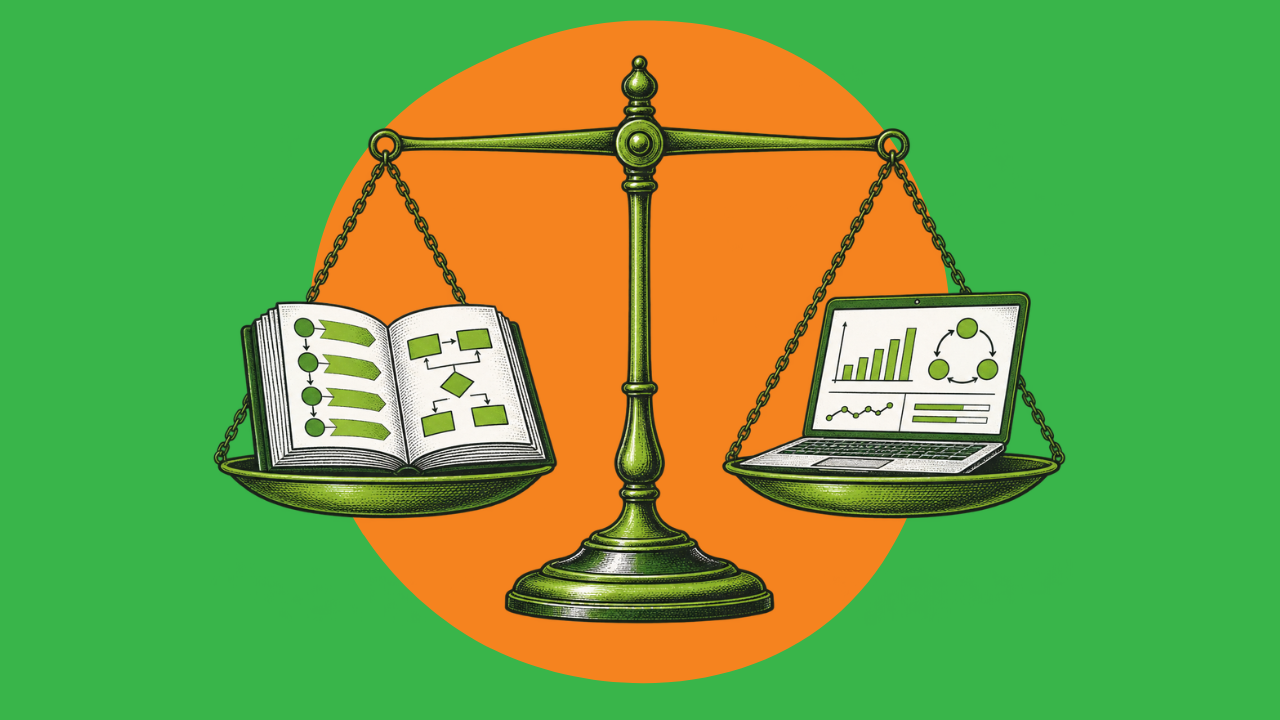
Culture Consultant or Engagement Software: The Short Answer
Hire a culture consultant first if your managers enforce standards differently or your core values no longer shape everyday decisions. Buy employee engagement software first if your values already have clearly defined behaviors and leaders need a regular way to see how they hold.
Each option leaves a gap. A consultant typically diagnoses the culture and hands over a report, and the team then carries out the recommendations on its own. Engagement software measures how people experience the culture, but measuring a problem does not fix it.
For most growth-stage organizations, the honest answer is both, in sequence. Cultureful is built for that sequence: measure culture before choosing priorities, align leaders around shared standards, then keep the work going through recurring systems that do not depend on the founder.
What Do You Get From a Culture Consultant vs Engagement Software?
Culture consultant: A culture consultant is an outside expert who assesses how an organization's culture works and recommends what to change. A typical project includes interviews or a culture diagnostic, a findings report and a set of recommendations for the team to implement.
Culture coach: A culture coach does the same diagnostic work, then stays involved as a partner while leaders and employees make the change. Coaching usually includes workshops, regular coaching calls and help building the habits that keep values in use, such as clear behaviors, recognition and feedback.
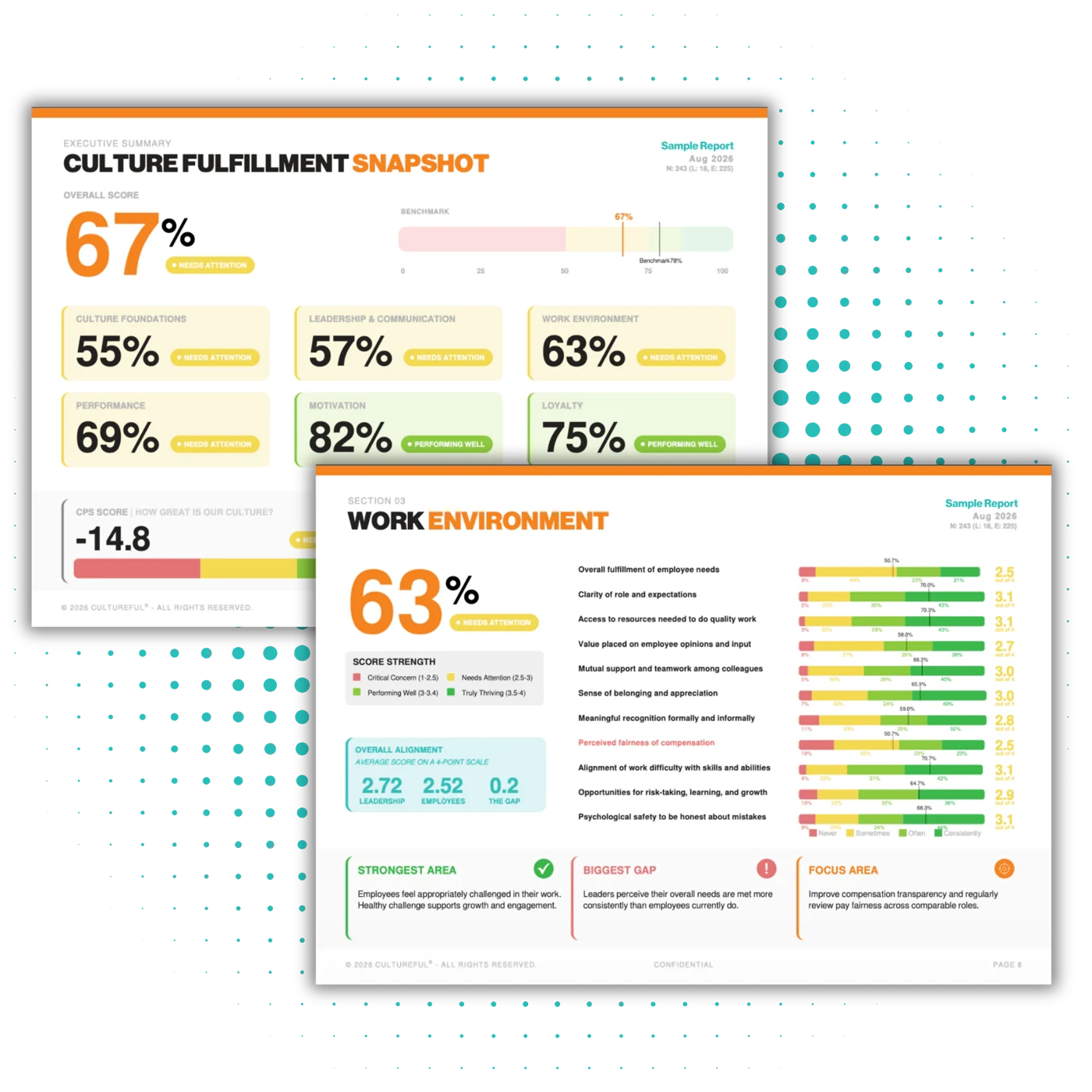
Employee engagement software: Engagement software is a subscription platform that collects employee feedback at scale through survey templates, pulse surveys and dashboards by team. It shows how people experience the culture, and your team decides what to do about it.
Culture and Business Operating System: This kind of platform measures the culture too, then reinforces it every day through values-based recognition, 360° feedback on values and performance, and a weekly leadership rhythm. It connects what you learn to what people actually do.
The simplest way to tell them apart is that a consultant and engagement software tell you what is happening, while a coach and an operating system help you change it and keep it changed.
Which Growth-Stage Situations Call for Each Option?
This page is for the leadership meeting where someone says, "We need to do something about culture," and the next question is whether to sign a consulting agreement or a software contract.
- Two managers, two standards. One team is held to deadlines and the values while the team next door is not. Start with a coach, because a dashboard can show that gap but cannot close it.
- Values on the wall, not in the work. Everyone agrees with the core values, but nobody can say what they look like in daily decisions. Start with a coach who can help the team define the behaviors behind each value.
- Values defined, visibility missing. The values have clear behaviors and leaders agree on them, but nobody can see how they hold across teams. Start with software, ideally a platform that reinforces the values as well as measuring them.
For the wider picture of who a culture assessment serves at growth stage, see our guide to choosing a culture assessment.
What to Look For Before You Hire a Consultant or Buy Software
- In a consultant or coach: Look for someone who starts with a diagnostic, involves employees as well as leaders and stays through implementation rather than handing over a report. Ask which tools your team will still be using a year after the engagement ends.
- In engagement software: Look beyond surveys. The stronger platforms tie recognition to your specific values, include 360° feedback that weighs values alongside results, work for frontline teams and come with hands-on implementation support.
- In your own team: Name the person who will own follow-through before you commit to either. Data and recommendations only matter when someone turns them into decisions, and that person should not always be the founder.
How Cultureful Connects Culture Coaching to a Culture Operating System
Cultureful coaches leadership teams through culture change and gives them a platform to sustain it, so a growth-stage team does not have to choose between expert guidance and an ongoing system.
It starts with Culture Clarity™, which measures cultural alignment across teams and brings hidden friction to the surface, so leaders know where to focus first.
Next, through Culture Fulfillment™, Cultureful coaches leaders and a Culture Team from across the organization to define the values, turn them into observable behaviors and launch them together. The full playbook is in our guide to turning values into everyday behaviors.
Then Cultureful OptiMode™, a Culture and Business Operating System platform, keeps the culture running day to day through values-based recognition, 360° feedback and a leadership operating rhythm, so the standard keeps showing up after the coaching ends.
That last step is the one most often skipped, and it is what protects the culture as the organization grows. When people thrive, organizations perform.
Culture Consultant vs Engagement Software: FAQ
What is the difference between a culture consultant and a culture coach?
A culture consultant typically assesses the culture and delivers a report with recommendations, and the team implements them on its own. A culture coach guides leaders and employees through each step of the change, from defining values to building the habits that reinforce them, and stays involved while the work takes hold. If your team has the time and expertise to act on recommendations alone, a consultant can be enough. If it does not, a coach is usually the better investment.
What does a culture consultant cost compared with employee engagement software?
Consultants and coaches are usually priced by project or retainer, while engagement software is a subscription priced per employee that grows with headcount. The bigger cost is often internal time. With software, someone has to manage surveys and managers have to act on the results. With a consultant or coach, leaders spend time in sessions and follow-up. Compare the total cost over the same period, including that time. For Cultureful pricing on a specific scope, ask us.
What should we expect in month one and month six from each option?
In month one, engagement software usually gives you a configured platform, a first survey and dashboards by team. A consultant or coach gives you a diagnosis and the first leadership conversations about it. By month six, the signals differ. With engagement software, look for trend lines, completed action plans and how often managers act on feedback. With a coach, look for values defined with the team and launched, managers addressing behavior earlier, and values showing up in hiring and recognition. A Culture and Business Operating System adds data from everyday work, such as who is being recognized for which values and how 360° feedback is shifting. That shows how the culture is lived between surveys, not only when one is collected. If month six looks like month one, nobody owns follow-through.
Can employee engagement software fix a culture problem on its own?
No. Engagement software can surface a culture problem, but it cannot hold the hard conversation with the manager causing it. That takes a person, whether an outside coach or a dedicated culture leader inside the company with the time and authority to lead the change. A one-off consulting project has the opposite gap: once it ends, behavior drifts back toward whatever leaders tolerate unless something reinforces the standard. Change works best when someone guides it and a platform keeps the values in use every day.
When should a growth-stage company use a culture consultant and engagement software together?
Start with a diagnostic, whichever option you choose. Bring in a coach or consultant first if managers enforce different standards or the core values have stopped shaping decisions. Add software once the values have clear behaviors and leaders agree on them, so the platform reinforces a defined standard. Adding a survey tool to a misaligned leadership team can produce more data and less trust.