Netflix's Downfall: The Case Against Boeing (2022) and Rory Kennedy's follow-up, Freefall: A Reckoning for Boeing (August 2026), tell a story that goes far beyond aircraft engineering. They show what happens when a company's stated values stop guiding its decisions.
For me, Boeing is one of the clearest examples of culture failure I know. Not because it lacked values. Because it had very good ones, and its leadership failed to live them.
Boeing Had the Right Values
Boeing's original Safety value said:
"We value human life and well-being above all else and take action accordingly… When it comes to safety, there are no competing priorities."
That last line is a rule, not a slogan. Behind schedule? Safety first. Over budget? Safety first. Investors disappointed? Safety still comes first.
Then-CEO Dennis Muilenburg even repeated that line to shareholders in April 2019, weeks after the second 737 MAX crash. The words were on the wall. The decisions didn't match them. That gap is what a culture failure looks like.
When Profit Became the Competing Priority
I see the 1997 merger with McDonnell Douglas as the turning point. Harry Stonecipher, who became Boeing's president after the merger, later told the Chicago Tribune the goal was a company run like a business "rather than a great engineering firm."
The consequences are well documented. A House investigation found that pressure to compete with Airbus drove cost-cutting and schedule pressure on the 737 MAX. Two crashes killed 346 people. And after the 2024 Alaska Airlines door-plug blowout, the FAA's own administrator said Boeing's culture had put production ahead of safety.
Pursuing profit isn't wrong. The question is what leadership was prepared to compromise to get it.
Shareholders Aren't the Only Stakeholders
Shareholders matter. But so do customers, employees, suppliers and communities, and in aviation, the people boarding the plane. Good capitalism creates value for all of them, and over the long run, doing the right thing is usually the more profitable choice too.
Boeing proves the point. Protecting short-term numbers didn't protect the company. It posted an $11.8 billion loss in 2024, and it only returned to profit in 2025 thanks to a one-time $9.6 billion asset sale (Boeing's results).
You can't build lasting financial success by undermining the standards your reputation depends on.
Speaking Up Has to Be Safe, and Rewarded
Freefall centers on employees who raised safety and quality concerns, including quality manager John Barnett, who died in 2024 (his death was ruled a suicide). Their stories raise the question every leader should ask: do your people believe raising a concern will protect the company, or end their career?
A hotline and the word "integrity" on your website mean nothing if speaking up leads to pressure or isolation. The CEO has to say it plainly: If you see someone compromising our values, tell me. We'll investigate, we'll protect you, and we'll act.
And the people who speak up should be recognized, not treated as obstacles. They may be protecting your customers, your reputation and your future.
Quality Needs the Power to Stop the Line
Here's the most practical test of any safety culture: when a quality inspector finds a problem, can they stop production? Or can a manager overrule them because the schedule is tight?
At Boeing, things moved the wrong way. In 2019, the company planned to cut hundreds of quality-inspector roles in favor of fewer human checks (Boeing later disputed that numbers fell and recalled some inspectors). Five years later, the NTSB found the Alaska Airlines door plug had left the factory without its securing bolts, citing inadequate training, guidance and oversight.
That's why culture is an operational issue, not a communications exercise. If quality can't act independently, your values are subordinate to your production targets.
Why Did Boeing Soften Its Safety Value?
This is the part I find most troubling.
After the crashes, Boeing had the chance to recommit to its original standard. Instead, it rewrote its values. The current version, introduced in April 2025, says: "Safety is the foundation of everything we do."
To be fair, Boeing built the new values with employees rather than handing them down, and says performance reviews will be based on them. That's the right way to create values people actually own.
But compare the language. "No competing priorities" is a rule for resolving conflict: when safety collides with anything else, safety wins. "The foundation of everything we do" is a principle. It's true, but it doesn't tell a manager what to do when the schedule is slipping and the quarter is at risk.
Boeing's problem was never the wording. It was the failure to live it. Softening the words after that failure risks taking pressure off the very leaders who need it most.
What Real Change Would Look Like
CEO Kelly Ortberg has told Congress that Boeing is aligning its culture and incentives with safety, quality and integrity. Good. Here's the evidence I'd look for:
- Quality has protected authority to stop production, even when it costs money.
- Employees raise concerns without fear, and see action when they do.
- The CEO talks about values in everyday decisions, not just in a crisis.
- Leaders who let targets override safety pay for it in their reviews and promotions.
- Real investment in quality staffing, training and oversight.
New values statements can't prove change. Only behavior can.
A Warning to Every CEO
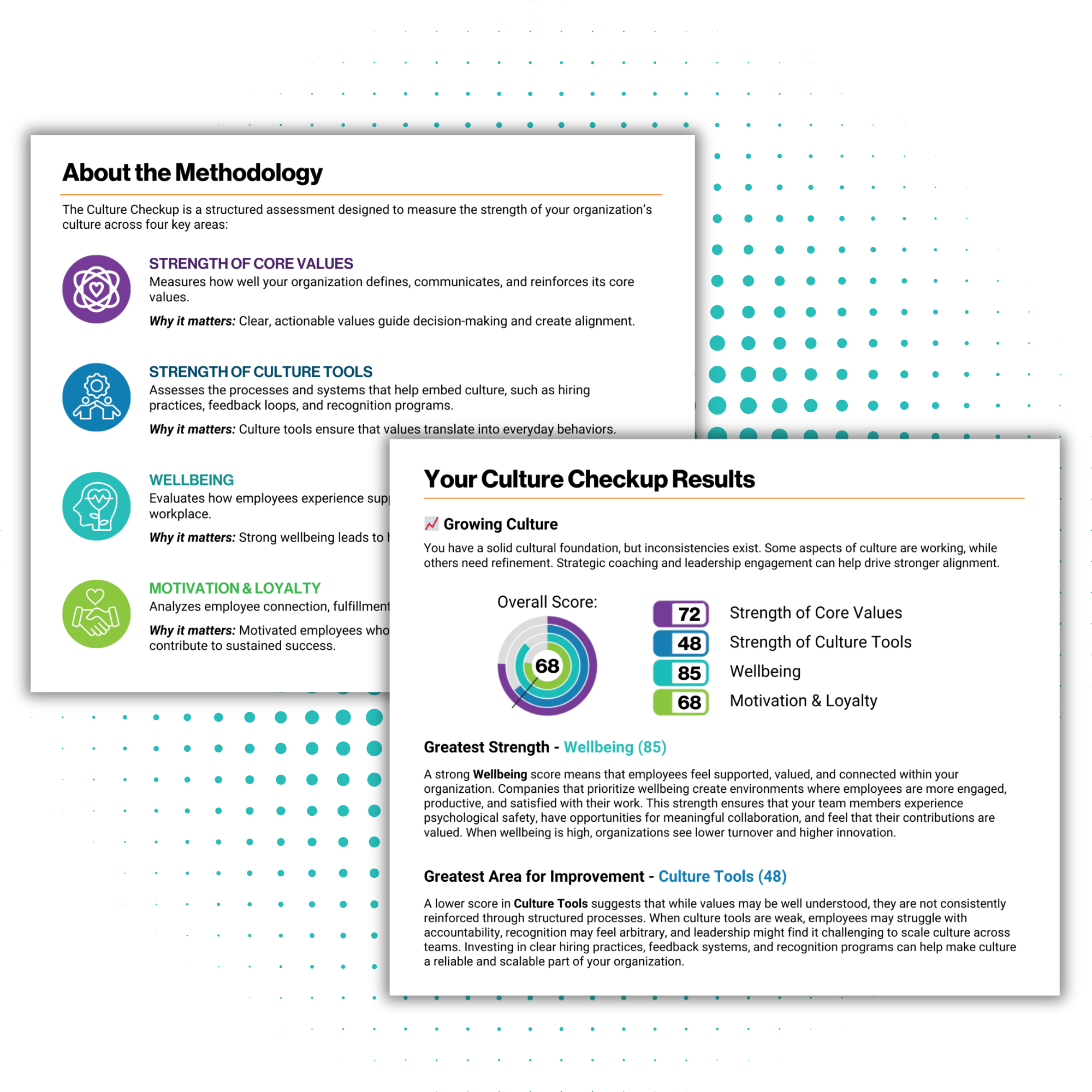
Culture isn't what you publish. It's what people experience: what leaders model, what managers reward, and what happens when priorities collide.
You can't claim safety comes first while letting production decide whether a concern gets fixed. You can't claim integrity while punishing people who tell uncomfortable truths. And you can't rebuild trust by rewriting your values.
Your values aren't defined by the words on the wall. They're defined by the decisions you make when living them is hardest.